

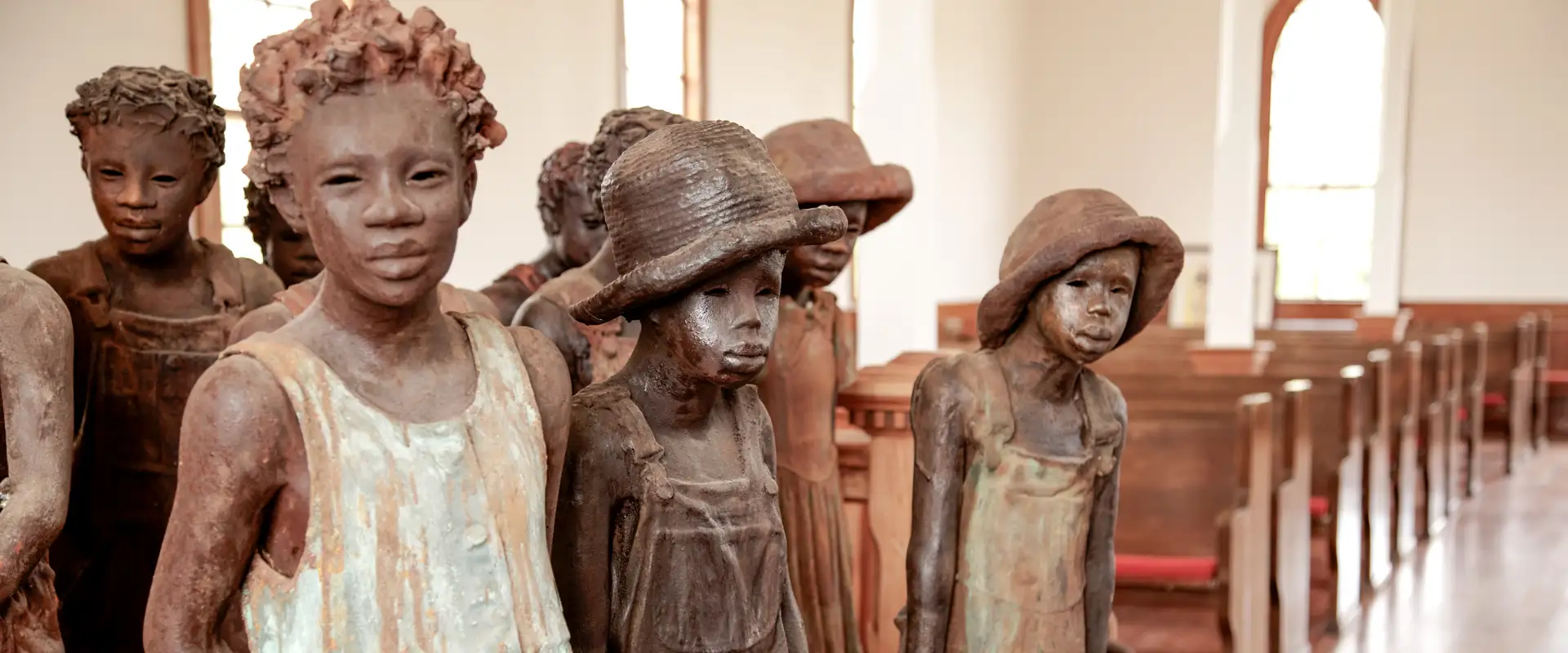

Free public event on Sunday, November 22, marks Native American Heritage Month.
Whitney Plantation will host Before and Beyond 1776: Indigenous Heritage and African Cultural Legacies of Louisiana’s German Coast on Sunday, November 22, 2026, from 10:00 a.m. to 3:00 p.m.
Held in recognition of Native American Heritage Month, this free community program examines the connected histories of Indigenous nations and enslaved Africans along the Mississippi River. Before and Beyond 1776 is made possible with funding from the Louisiana Endowment for the Humanities.
Long before European settlers arrived on Louisiana’s German Coast in the early 1720s, Indigenous peoples such as the Taensa and Houma stewarded the land. Beginning in the colonial era, enslaved West Africans cleared the cypress swamps, built the levees, and cultivated the rice, indigo, and sugarcane that defined the region’s economy. Throughout Louisiana’s history, Indigenous peoples and self-emancipated Africans also crossed paths in the surrounding wetlands, sharing medicinal knowledge, musical traditions, and strategies for survival.
“To understand the history of Louisiana’s German Coast and the nation as a whole, we have to look beyond 1776 and recognize the people whose knowledge and labor shaped this region,” said Executive Director Ashley Rogers. “We invite local families, students, and visitors to engage directly with the vibrant cultural traditions that are alive in our community today.”
During the event, members of the Verdin family will share generations of Indigenous cultural knowledge and living traditions:
- Donny Verdin, a member of the Houma Nation participating in an individual capacity, will lead an opening prayer song and share cultural storytelling.
- Ashton Verdin (“Nita Holo”) will present traditional Indigenous dance and cultural interpretation.
- Devin Verdin will perform a traditional Fancy Dance.
- Alexandra “Allie” Verdin will perform a traditional Shawl Dance.
Whitney Plantation Director of Research Dr. Ibrahima Seck will also deliver a historical presentation examining the enduring contributions of enslaved Africans to Louisiana’s German Coast, including their agricultural expertise, culinary traditions, acts of resistance, and influence on regional identity.
“Enslaved West Africans brought sophisticated agricultural and cultural knowledge to the banks of the Mississippi River, transforming the landscape while preserving their humanity and traditions,” said Dr. Ibrahima Seck, director of research at Whitney Plantation. “Their legacies, alongside those of the Indigenous peoples who welcomed and interacted with them in the wetlands, remain foundational to Louisiana’s identity. Hidden history hurts, and sharing these stories together helps ensure future generations understand where we come from.”
Admission to this event is free and open to the public. Regular museum tours will be available throughout the day and are subject to standard admission fees.
About Whitney Plantation
Whitney Plantation is the first plantation museum in Louisiana dedicated to telling the history of slavery from the perspective of enslaved people. Through immersive exhibits, historic site preservation, and educational programs, Whitney Plantation, located less than an hour from New Orleans, strives to foster a deeper understanding of the legacy of slavery and its lasting impact on American society. Learn more at whitneyplantation.org and follow us on Facebook, Instagram, Bluesky, YouTube, and LinkedIn.